Trump’s Iran Post Sparks $580 Million Oil Market Bets
Minutes before Trump’s Iran post, $580M in oil bets hit markets. Prices plunged 14%, then rebounded after Tehran denied talks, fueling volatility.
Loading...

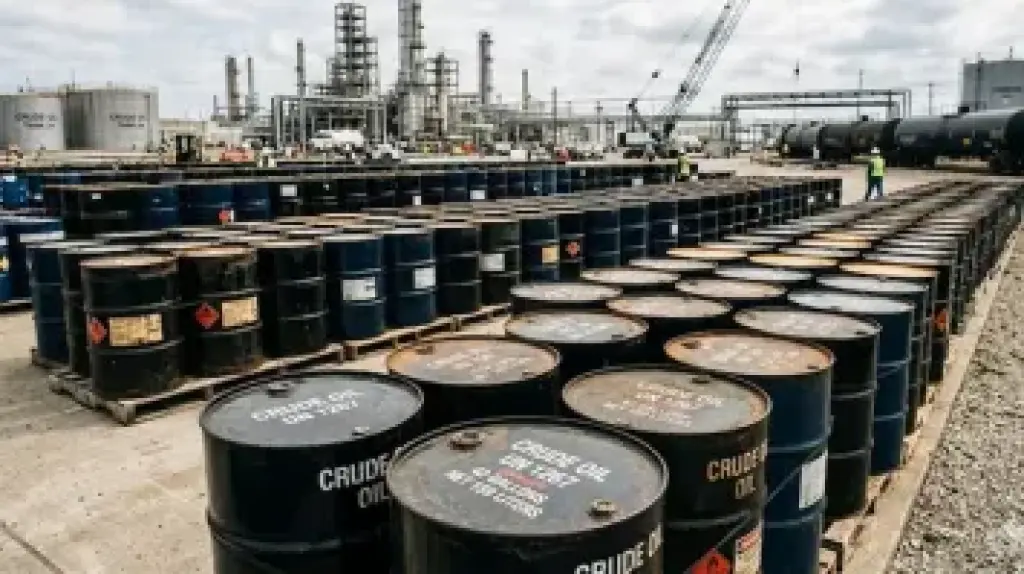
Brent crude surges past $100 as U.S.–Iran conflict disrupts Strait of Hormuz, fueling inflation fears and economic strain from Cape Town to New York.
Brent crude oil prices have surged past the symbolic $100 per barrel mark, driven by escalating tensions in the Middle East. The ongoing U.S.–Iran conflict has disrupted shipping routes through the Strait of Hormuz, one of the world’s most critical energy corridors, sparking fears of prolonged inflation and economic strain across both developed and emerging economies.
Table of contents [Show]
The Strait of Hormuz, a narrow passage linking the Persian Gulf to global markets, handles nearly 20% of the world’s crude oil exports. Recent attacks on tankers and heightened military activity have raised concerns about the security of this vital route. Traders and analysts warn that any prolonged disruption could tighten supply further, pushing Brent crude prices even higher.
Brent futures recently climbed above $104 per barrel, while West Texas Intermediate (WTI) hovered around $95. These figures reflect not only immediate supply risks but also the broader uncertainty surrounding the conflict’s trajectory. For energy markets, uncertainty often translates into volatility, and volatility tends to drive prices upward.
Rising oil prices have a domino effect on the global economy. Higher crude costs translate into more expensive fuel, shipping, and production. This, in turn, feeds into consumer prices, raising inflation across multiple sectors.
For many economies still recovering from pandemic‑era disruptions, this surge in Brent oil prices adds another layer of strain. Central banks may be forced to keep interest rates higher for longer, slowing growth in an effort to contain inflation.
South Africa, like many emerging markets, is particularly vulnerable to energy price shocks. The country imports a significant portion of its fuel, meaning global price increases directly affect local petrol and diesel costs. Consumers are already feeling the pinch at the pump, with transport costs rising steadily.
Economists warn that higher oil prices could slow South Africa’s GDP growth, which is forecast at just 1.6% for 2026. Inflationary pressures may also limit the Reserve Bank’s ability to cut interest rates, keeping borrowing costs high for households and businesses. For ordinary South Africans, this means tighter budgets, reduced disposable income, and slower economic recovery.
Beyond the numbers, the rise in Brent oil prices has a very human impact. Families face higher costs for commuting, groceries, and electricity. Small businesses, especially those in transport and retail, struggle to absorb rising expenses without passing them on to customers.
A Cape Town taxi driver recently summed it up: “Every time the oil price goes up, I have to raise fares. But passengers can’t afford it, so I lose business. It’s a lose‑lose situation.” This sentiment captures the ripple effect of global energy markets on local livelihoods.
Analysts remain divided on whether Brent crude will stabilize or continue climbing. Some forecasts suggest prices could remain above $100 for years if the U.S.–Iran conflict drags on. Others argue that increased production from non‑OPEC countries, or a diplomatic resolution, could ease supply concerns.
Still, the consensus is clear: volatility will remain a defining feature of energy markets in the near term. Governments may need to consider subsidies, strategic reserves, or accelerated investment in renewable energy to cushion consumers from prolonged high prices.
The surge in Brent oil prices amid the U.S.–Iran conflict underscores the interconnectedness of global markets. What happens in the Strait of Hormuz reverberates in Cape Town, London, and New York. For policymakers, businesses, and households alike, the challenge lies in navigating this uncertainty while preparing for a future where energy volatility may become the norm.
As families adjust budgets and businesses rethink strategies, the human dimension of rising oil prices becomes impossible to ignore. Behind every barrel traded on global markets are millions of lives affected by the cost of fuel, food, and electricity. The story of Brent oil is not just about numbers — it is about people.
Minutes before Trump’s Iran post, $580M in oil bets hit markets. Prices plunged 14%, then rebounded after Tehran denied talks, fueling volatility.
Zimbabwe has suspended raw lithium exports, sparking a surge in Chinese prices and raising global supply chain concerns. Discover the impact on energy storage, mining, and the clean energy transition.