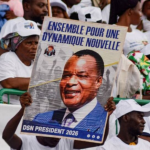
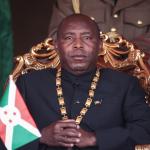
Burundi’s President Évariste Ndayishimiye Secures Ruling Party Nomination for 2027 Election
Burundi’s ruling CNDD‑FDD nominates President Évariste Ndayishimiye for the 2027 election, sparking debate over governance, rights, and the nation’s future.
Loading...

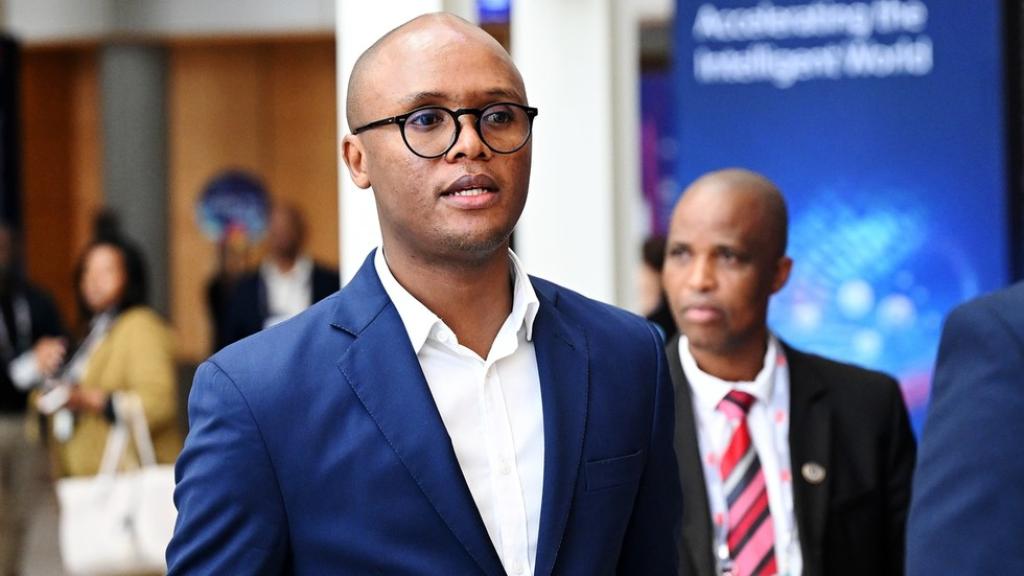
South Africa withdraws its draft AI policy after fake, AI‑generated citations are discovered, raising concerns about oversight, credibility, and future governance.
South Africa’s government has withdrawn its first national artificial intelligence (AI) policy after it was revealed that large portions of the document relied on fictitious, AI‑generated sources. The discovery has embarrassed the Department of Communications and Digital Technologies (DCDT) and raised serious questions about the country’s readiness to regulate emerging technologies.
Communications and Digital Technologies Minister Solly Malatsi confirmed the withdrawal on Sunday, describing the incident as a “serious failure” that compromised the credibility of the entire policy process.
Table of contents [Show]
In a statement posted on X, Malatsi said the most plausible explanation was that AI‑generated citations had been included without proper verification. He stressed that this was not a minor technical error but a lapse that undermined the integrity of a policy intended to guide South Africa’s digital future.
“This unacceptable lapse proves why vigilant human oversight over the use of artificial intelligence is critical. It’s a lesson we take with humility,” he wrote.
Malatsi added that there would be consequences for those responsible, though he did not specify when a revised draft would be released.
The withdrawn draft was ambitious, positioning South Africa as a potential continental leader in AI governance and innovation. It outlined plans to establish a National AI Commission, an AI Ethics Board, and an AI Regulatory Authority, while also proposing tax incentives, grants, and subsidies to encourage private‑sector collaboration.
The policy aimed to address South Africa’s digital skills gap and stimulate investment in AI‑driven industries such as healthcare, finance, agriculture, and public services.
According to reporting by Daily Maverick, more than one‑third of the policy’s reference list contained fabricated or unverifiable sources. The issue affected three of the policy’s six foundational pillars: Capacity and Talent Development, Economic Transformation, and Responsible Governance.
Analysts noted that the structure and phrasing of the references resembled typical AI hallucinations — plausible‑sounding but entirely fictional.
The scandal has renewed scrutiny of the DCDT’s internal processes. In 2025, Dumisani Sondlo, the department’s AI policy lead, admitted that developing the National AI Policy was “an act of acknowledging that we don’t know enough.” That statement, once seen as a sign of humility, now appears to foreshadow the department’s struggle to manage a complex, technical policy area without sufficient expertise or safeguards.
The incident has sparked debate about the risks of relying on AI tools in policymaking without rigorous human review. Analysts say the scandal highlights the danger of unverified AI‑generated content in official documents, the need for stronger internal review mechanisms, and the importance of building local AI expertise rather than outsourcing critical thinking to automated systems.
The irony of an AI policy being undermined by AI hallucinations has not gone unnoticed. Commentators have described it as a “digital ouroboros” — a system consuming itself.
For readers interested in the global AI race and its impact on politics and society, consider Supremacy: AI, ChatGPT, and the Race That Will Change the World by Parmy Olson .
As an Amazon Associate I earn from qualifying purchases.
Malatsi has promised accountability but has not provided a timeline for the release of a corrected draft. Industry stakeholders and civil society groups are urging the government to conduct a full audit of the drafting process, bring in independent experts to review future versions, and ensure that the next draft is grounded in verifiable research and local realities.
For now, South Africa’s national AI strategy remains on hold; a setback for a country seeking to position itself as a leader in Africa’s digital transformation.
The withdrawal of South Africa’s draft AI policy marks a significant moment in the country’s technological governance journey. While the scandal has exposed weaknesses in oversight and expertise, it also offers an opportunity for the government to rebuild trust through transparency, accountability, and stronger human‑led review processes.
Burundi’s ruling CNDD‑FDD nominates President Évariste Ndayishimiye for the 2027 election, sparking debate over governance, rights, and the nation’s future.
Julius Malema sentenced to five years for firearm offenses. His appeal could reshape South Africa’s politics, justice system, and democratic institutions.
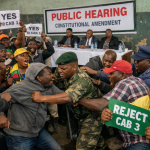
ZANU‑PF is pushing a controversial constitutional amendment in Zimbabwe to extend presidential powers and weaken direct voting rights. Public hearings have been marred by violence, intimidation, and bussing of supporters, raising fears of democratic backsliding.