Deadly storms and tornadoes hit the US states of Michigan and Oklahoma
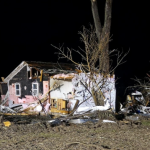
Four people were killed and twelve injured as a tornado ripped through Union City, Michigan. Now, the neighborhood is coming together to pick up the debris.
Loading...

Following attacks on oil installations, Iran is seeing black rain. WHO and Scientists warn of long-term repercussions
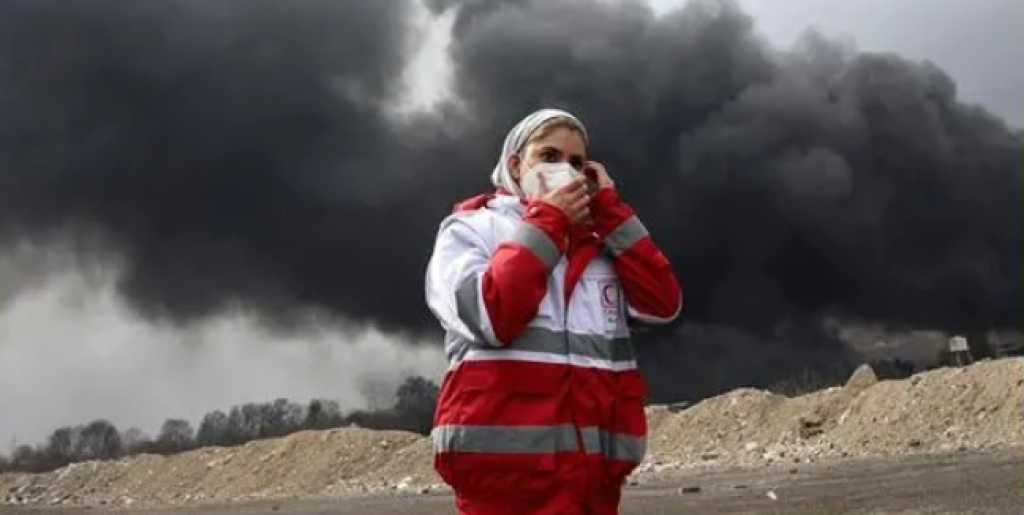
The World Health Organization supported Iran's recommendation to stay indoors on Tuesday, warning that the "black rain" and hazardous substances in Iran's air following strikes on oil facilities could cause respiratory issues.
There have been numerous complaints of oil-laden rain this week, according to the U.N. health agency, which has an office in Iran and collaborates with authorities on health issues. In an increase in attacks on Iran's domestic energy supply as part of the U.S.-Israeli campaign, an oil refinery was attacked on Monday, choking Tehran with black smoke.
At a media event in Geneva, WHO spokesperson Christian Lindmeier stated, "The black rain and the acidic rain coming with it is indeed a danger for the population, respiratory mainly."
Since the attacks, which occurred just over a week into the U.S.-Israeli war on Iran, the UN health office says it has received numerous reports of black rain and endorses Iran's advise advising people to stay inside.
We have verified attacks on at least four oil facilities in the Iranian capital since the US-Israeli attacks started on February 28.
While scientists caution that the scope of some of the pollutants emitted could be "unprecedented," residents said that haze and pollution have shut out the sun and left a strong burning smell in several parts of the city.
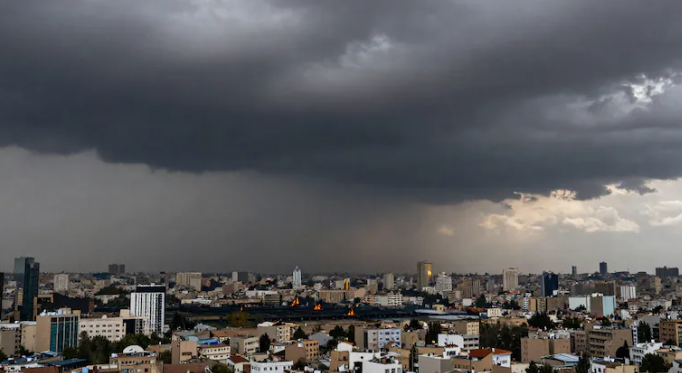
We are now unable to determine the full extent of the damage at either of the oil facilities affected over the weekend due to cloud cover and smoke plumes from the ongoing fires.
However, photos obtained at Shahran on Sunday morning showed firefighters examining scorched structures, roaring fires, and burned-out oil tankers.
Petroleum mixes can contain hundreds of petroleum hydrocarbons, including those that are "very, very toxic," according to Peter Ross, senior scientist and pollution specialist at the Raincoast Conservation Foundation in Sidney, British Columbia.
In a post on X on March 7, the Israel Defense Forces (IDF) claimed to have struck "fuel depots" close to Tehran, along with a photo of the Tehran oil refinery that showed damage.
According to Ross, when those harmful gasses are released into the sky by flames, people who breathe them in run a serious risk since they "can make them very dizzy, can render them unconscious, it can kill them."
When asked if the WHO supported that recommendation, he responded, "Given what is at risk right now, the oil storage facilities, the refineries that have been struck, triggering fires, bringing serious air quality concerns, that is a good idea."
He said that "the massive release of toxic hydrocarbons, sulfur oxides, and nitrogen compounds, into the air" was the result of the hits. According to scientists, respiratory difficulties, skin and eye irritation, and headaches could result from breathing in or handling the smoke or particles. Certain cancers are more likely to develop after prolonged exposure to some of the substances.
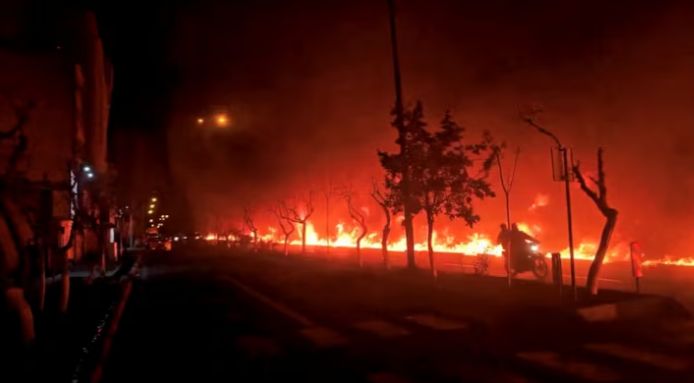
According to scientists, the black rain was caused by a weather pattern that arrived in the area and brought rain that mixed with airborne particles. People's perspectives were opened by the rain, according to University of Reading research scientist Akshay Deoras. However, he stated that prolonged exposure to poisonous air was probably more of a health danger, which people might avoid by staying indoors or covering their skin with masks when they were outside.
He emphasized that weather projections indicated dry conditions were predicted for the remainder of the week, despite the absence of data regarding the area's air quality. He also said that the quality of the air will probably get better with time.
Rainfall tainted with dark particles like soot, ash, oil droplets, or industrial pollutants is referred to as "black rain." As raindrops fall through contaminated air, these particles combine with them, giving the rain an oily or black hue.
The process is referred to by scientists as "atmospheric scavenging." Raindrops gather and transport airborne contaminants, such as smoke, soot, or chemicals, to the ground.
This phenomenon may follow:
In one instance, burning oil infrastructure is said to have spewed sulfur compounds, hydrocarbons, and other pollutants into the atmosphere. These pollutants eventually mixed with rainfall to create the black precipitation seen in some places.
Depending on the contaminants in the atmosphere, black rain may bring a number of health problems.

Four people were killed and twelve injured as a tornado ripped through Union City, Michigan. Now, the neighborhood is coming together to pick up the debris.